Patterns & Symbols: Meaning in the Details
Some porcelain designs tell a story through a scene. Others begin with a repeated shape, a written character or a small emblem. Our Patterns & symbols collection brings these details into focus, from coin-inspired decoration to calligraphy and longevity-themed designs.
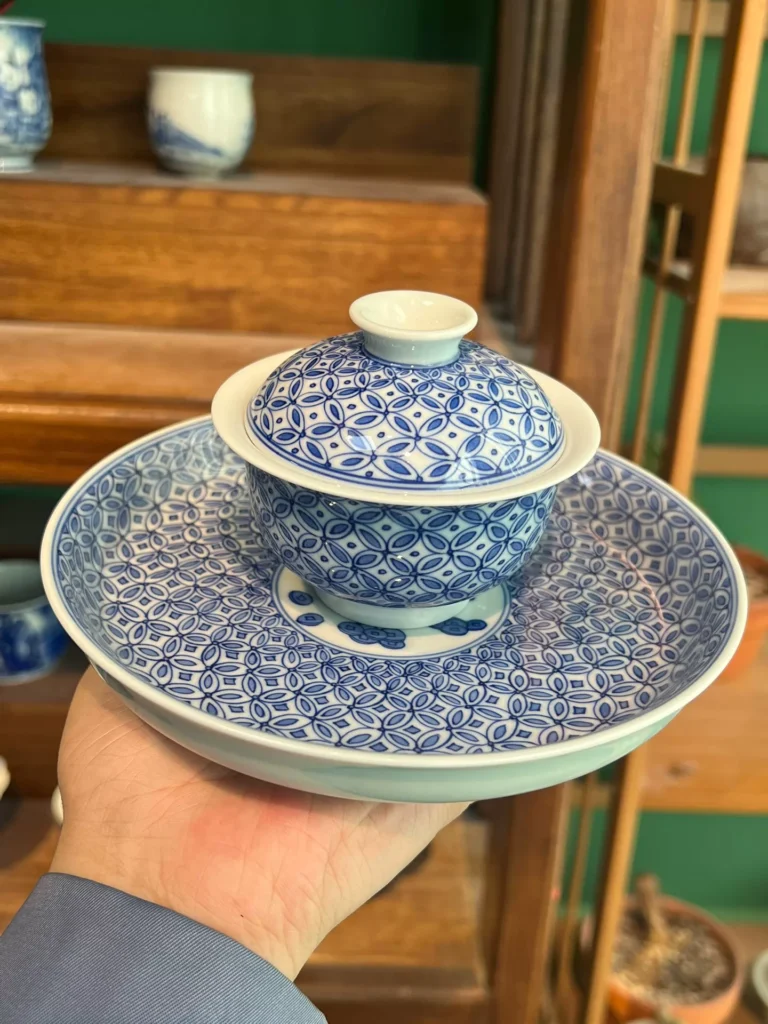
Pattern first, meaning second
A repeated motif does two jobs. It can carry an association, and it can organize the surface of a vessel. Notice its spacing, orientation and scale. A close arrangement can feel lively and full, while a few larger elements leave more of the porcelain visible.
Look at the borders too. A band near a rim can frame a cup, while repeated elements around a gaiwan may connect its different parts. Even before a symbol is identified, the balance of these shapes helps explain why a piece appeals to you.
Coins and wishes for prosperity
Coins are one example of objects used symbolically in Chinese decoration. The British Museum’s record for a porcelain abacus identifies a golden coin among its auspicious motifs as a symbol of wealth. This provides historical context for the appeal of coin imagery; it is not a promise that owning a decorated object will change anyone’s fortune.
On a current piece, look for how the coin-like forms are arranged rather than assuming each design follows the same historical pattern. Compare the outline, the central opening where visible, and the way one repeated shape relates to the next.
Symbols can work together
The Allen Memorial Art Museum describes a Chinese double-gourd vase whose decoration combines wishes for happiness, longevity and good fortune, including visual puns. The important lesson is that the whole arrangement can matter: a symbol’s surroundings may contribute to the message.
Written characters require the same care. A stylized character may be arranged for decoration, and a photograph can make a small inscription difficult to read. Do not assume that every mark is an artist’s signature, a date or a guarantee of origin. If an inscription is central to your choice, ask about the particular piece.
Compare a few details from our collection
Start with Lucky Coins Gaiwan and Longevity Tea Cup. Their names introduce different themes within this group. Look through each gallery to compare the distribution of the decoration and the relationship between the main motif and any borders.
You can choose a symbolic piece because you enjoy its associations, because the pattern works with your other teaware, or simply because it looks right in your hand. A gift can express a warm wish without making a claim about the recipient’s beliefs or the object’s power.
Bring repetition into an everyday setting
One patterned vessel can create a link between several simpler pieces. Try repeating a color, a rounded outline or a similar degree of visual detail. Matching every motif is optional; an arrangement can feel coherent while leaving each object its own character.
Finish the choice with practical details. Check capacity, dimensions, decoration information and the included items on the individual listing. A meaningful motif becomes more enjoyable when the vessel also fits the way you use it.
Compare pieces in this motif
These examples use the current product listings. Capacity is approximate; check the full contents and condition notes before choosing.
| Piece | Decoration | Listed capacity |
|---|---|---|
| Lucky Coins Gaiwan JDZ0004 | Blue & white | Gaiwan: 120 ml |
| Lucky Coins Tea Set JDZ0014 | Blue & white | Gaiwan: 120 ml; Cup: 100 ml |
| Lucky Coins Tea Cup JDZ0023 | Blue & white | Cup: 90 ml |
Choose a tea form · Understand capacity · Care and arrival checklist