Figures & Stories: Porcelain That Invites a Closer Look
A group in a garden. A traveler on a journey. Children at play. Figure decoration gives porcelain a human scale: you start noticing where someone is standing, what they are looking at, and how they relate to the setting. A small cup can hold a scene that takes time to explore.
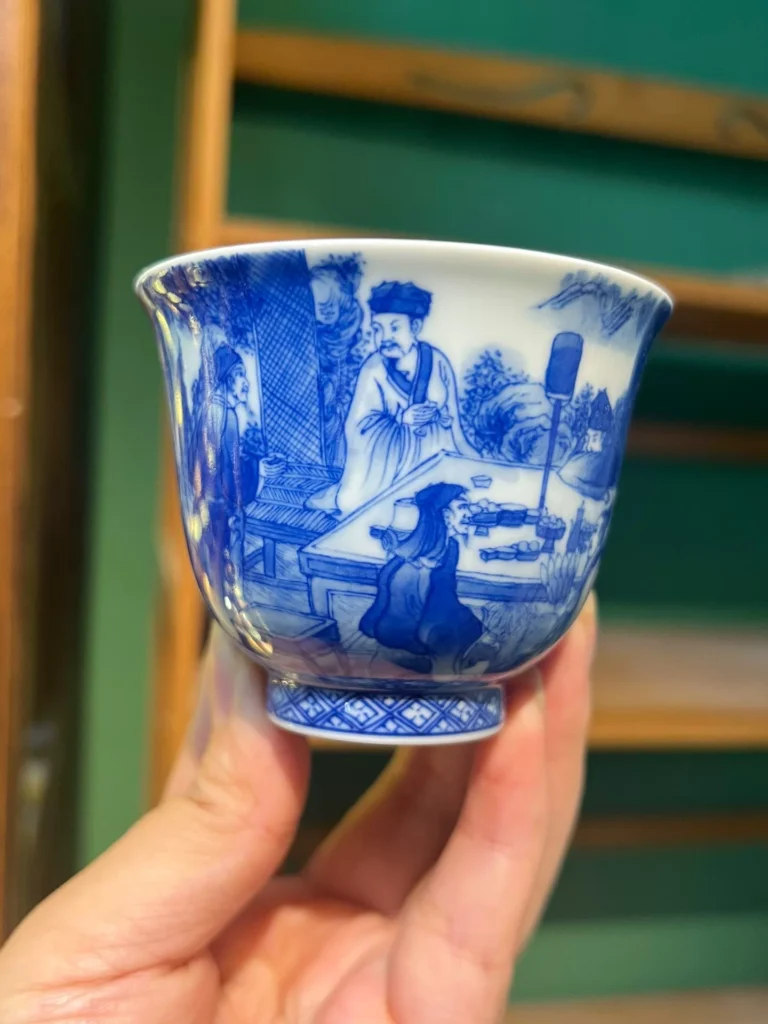
Stories have a place on porcelain
Historical Chinese ceramics sometimes draw on literature and drama. A late seventeenth-century Jingdezhen vase in the Metropolitan Museum of Art depicts scenes from Wang Shifu’s Romance of the West Chamber, a play about the lovers Zhang Gong and Cui Yingying. It provides a clear example of a story moving from performance and literature onto a ceramic surface.
Not every figure scene can be identified so precisely. Some designs depict a general activity or gathering, while others refer to a named subject. A similar-looking pavilion or robe is not enough to identify a particular episode. Enjoy the scene first, and use a documented title or explanation when one is available.
Read a scene in three passes
First, find the people. Count the figures you can see and notice their relative sizes. Look at gestures and direction: someone turning toward another person can connect parts of the picture that would otherwise feel separate.
Then, look at the setting. A tree, doorway, table or path may help organize the scene. These details can tell you where attention is focused even when you do not know the subject’s name. Compare the open space around the figures with the denser passages of decoration.
Finally, turn the vessel. A curved surface can hide the next part of a composition. Explore every gallery photograph rather than expecting a single image to show the whole scene. What looks like one isolated figure may belong to a larger group.
Named subjects in our collection
Begin with West Garden Gathering Tea Cup and Children at Play Aroma Cup. The titles point to a gathering and to children at play, offering two different ways to approach human subjects on tea cups. Compare what is actually visible in each gallery: the number of figures, their placement, and the balance between people and their surroundings.
Our product names help you browse the collection. They should not be read as a claim that a current piece is the same work as a museum object, or that every figure can be matched to a historical person. Where an exact episode matters to your choice, contact us about the particular listing before ordering.
Choose a scene you want to return to
Figure decoration suits someone who enjoys discovering a detail over time. A tea cup can offer a more intimate view, while a larger vessel may provide room for a broader arrangement. Choose the form for how you drink tea, then the scene for the attention it holds.
When mixing pieces, a common palette can connect different subjects. You can also keep one narrative cup as a personal favorite among simpler teaware. Always compare capacity, dimensions and the listing’s contents alongside the picture.
Compare pieces in this motif
These examples use the current product listings. Capacity is approximate; check the full contents and condition notes before choosing.
| Piece | Decoration | Listed capacity |
|---|---|---|
| Children at Play Aroma Cup JDZ0026 | Blue & white | Cup: 80 ml |
| Guiguzi’s Journey Tea Cup JDZ0031 | Blue & white | Cup: 100 ml |
| Scholars’ Gathering Tea Cup JDZ0032 | Blue & white | Cup: 120 ml |
Choose a tea form · Understand capacity · Care and arrival checklist