Animals on Porcelain: A Little Personality
Sometimes it is a small creature that makes a piece memorable. A rabbit, a fish, or a lion at play can turn a tea cup into something you recognize immediately. Our Animals collection brings these subjects together so you can choose by character as well as by shape.
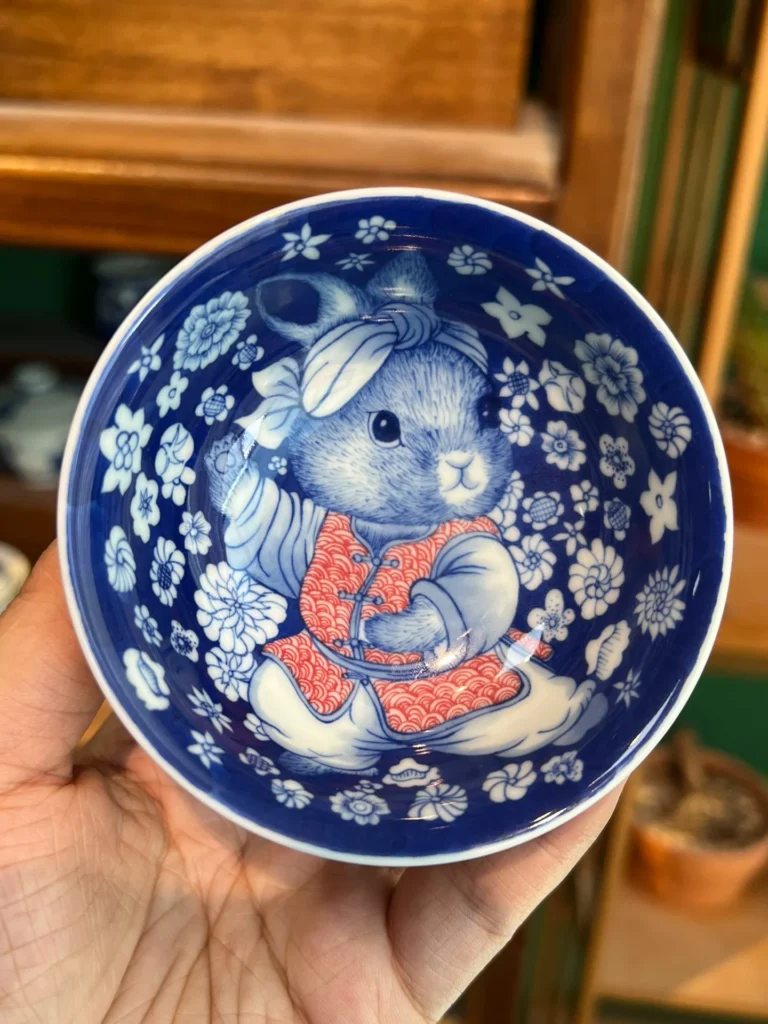
Read the posture before the symbolism
Begin with what the creature is doing. Is it resting, turning, swimming or looking toward another part of the scene? The direction of a head, the curve of a back and the spacing between two animals can suggest movement even on a very small surface. A single subject surrounded by white space creates a different impression from several figures spread around a bowl.
Scale changes the mood too. A large animal can become the main feature of a cup, while smaller animals may invite you to look closely through flowers, water plants or other decoration. Neither approach is inherently better. One makes an immediate impression; the other rewards a slower look.
Animals can carry wishes as well as character
In Chinese decorative art, animals sometimes take part in visual wordplay and auspicious wishes. One well-documented example is the bat: the San Antonio Museum of Art explains its association with happiness through the similarity between the Chinese words for bat and good fortune. Its decorated vase combines bats with other motifs to build a larger message.
That example is a reminder to read animals in context. It is not a reason to give every rabbit, fish or lion a fixed meaning. A modern design can also be playful, decorative or personal. Where a specific story or interpretation is not documented, it is better to enjoy the visible character than to invent a legend for it.
Follow the scene around the vessel
A cover photograph may show only one part of an animal design. Look through the gallery for the other side of the cup, the relationship between a gaiwan lid and bowl, and any decoration inside the vessel. Pay attention to whether plants or borders continue behind the main subject.
Compare Little Rabbit Tea Cup and Playful Lions Tea Cup. Their subjects offer two starting points for choosing a piece with personality. Use the photographs to decide which expression and arrangement you prefer, then compare the actual form and measurements rather than assuming that similar-looking cups have the same capacity.
A small point of connection
An animal motif can make a thoughtful gift when it connects with the recipient: a favorite creature, a playful style, or a shared memory. You do not need to promise luck or attach a formal symbolic meaning for that connection to matter.
For your own tea table, consider whether the animal should be a small accent or the main subject. One expressive cup alongside quieter pieces can be enough. The useful questions remain simple: do you enjoy the design, does the cup suit your way of drinking tea, and are its listed size and contents right for you?
Compare pieces in this motif
These examples use the current product listings. Capacity is approximate; check the full contents and condition notes before choosing.
| Piece | Decoration | Listed capacity |
|---|---|---|
| Playful Lions Tea Cup JDZ0001 | Blue & white | Cup: 100 ml |
| Little Rabbit Tea Cup JDZ0008 | Blue & white | Cup: 100 ml |
| Fish & Water Plants Tea Set JDZ0009 | Blue & copper red | Gaiwan: 120 ml |
Choose a tea form · Understand capacity · Care and arrival checklist