Dragons & Mythical Creatures: Movement and Wonder
A curling body, a raised head, a trail of cloud: mythical creatures bring energy to the surface of porcelain. In this part of the Artisanoria collection, dragon and qilin subjects offer designs that can feel dramatic, intricate or playful, depending on the individual piece.
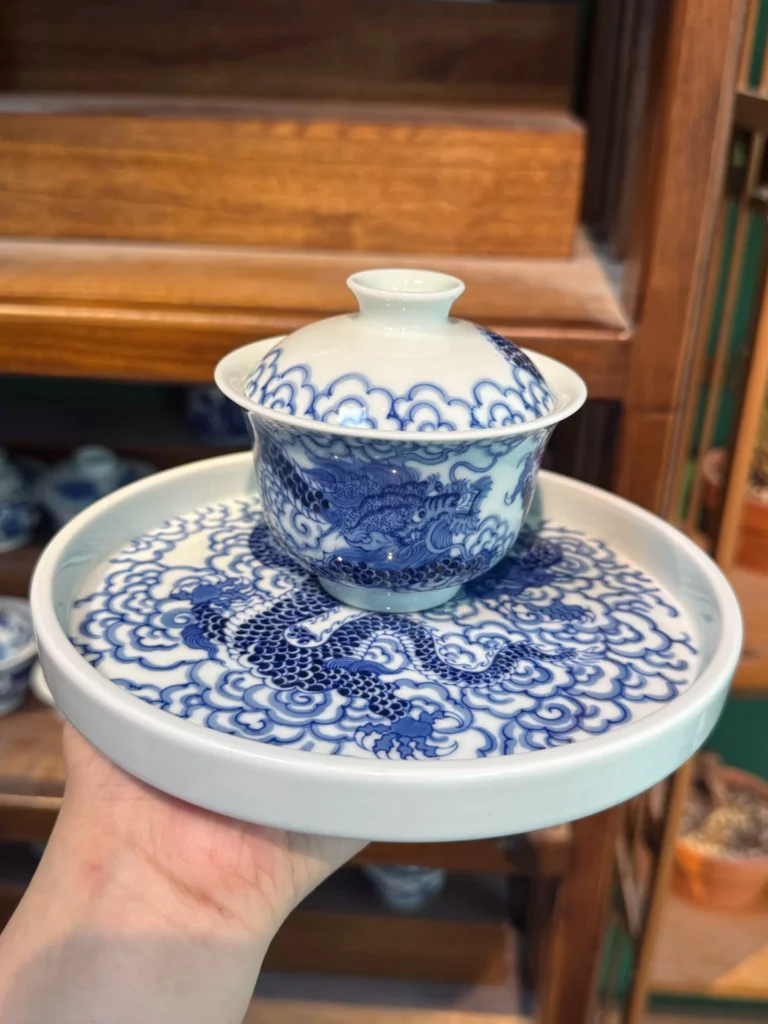
The dragon has more than one meaning
The Chinese dragon cannot be reduced to a single symbol. In its account of a Jingdezhen vase decorated with a dragon among clouds, the Metropolitan Museum of Art describes associations with protection, happiness, fertility, water and imperial rule. The same broad subject can therefore carry different emphasis in different settings.
That history is a starting point for appreciation, not proof of a modern object’s age or status. A dragon on a contemporary cup does not establish an imperial connection, and a historical-looking motif does not make the vessel an antique. Read a shop listing for the information about the actual item, and a museum record for the history of its own object.
Follow the line of the creature
When comparing dragon designs, start at the head and follow the body. Does it form a broad curve, circle the vessel or disappear behind other decoration? Look at how the claws, tail and surrounding elements direct your eye. The movement of the composition often makes a stronger first impression than any isolated detail.
Clouds and water can create a setting for the creature as well as fill the space around it. A densely patterned background may make the body harder to follow at first, while an open composition can place more emphasis on its silhouette. Use the alternate photographs to trace the whole design.
Look carefully at names and identities
Our collection also includes pieces named for the qilin. Treat the name as an invitation to inspect the creature’s shape and its surroundings, rather than assuming it will resemble a dragon or a familiar real animal. Stylized bodies can be interpreted differently when seen only from one angle.
Compare Cloud Dragon Gaiwan with Qilin Gaiwan. They sit within the same browsing family but feature different named subjects. The individual galleries are the best place to compare the visible forms, border designs and placement of color.
Bring a strong motif to the tea table
A mythical creature can provide a clear focal point. If you prefer a quieter setting, choose one decorated vessel and pair it with pieces that share a color or a simple outline. If you enjoy richer decoration, compare how the motifs relate across a lid, bowl and supporting piece.
For a gaiwan, visual preference is only part of the choice. Check its listed capacity and the exact items included. A photograph showing several objects does not by itself explain which pieces belong to the listing. Let the design draw you in, then use the product details to choose confidently.
Explore dragons & mythical creatures ↗
Compare pieces in this motif
These examples use the current product listings. Capacity is approximate; check the full contents and condition notes before choosing.
| Piece | Decoration | Listed capacity |
|---|---|---|
| Qilin Gaiwan JDZ0005 | Blue & copper red | Gaiwan: 120 ml |
| Dragon King Gaiwan JDZ0016 | Blue & copper red | Gaiwan: 120 ml |
| Ocean Waves Gaiwan JDZ0017 | Blue & white | Gaiwan: 120 ml |
Choose a tea form · Understand capacity · Care and arrival checklist